Verified by Trustindex

Sentient Computing recently hosted Curtin University PhD student Bruno Hernandez for a research internship reviewing the academic evidence alongside four of Sentient’s own VR training modules. His conclusion for mining, defence and energy: the question isn’t CBT or VR. It’s which job each one should do.
Most organisations and companies operating already use some form of Computer-Based Training (CBT). Whether it’s online inductions, safety modules, compliance courses or Learning Management Systems (eLearning), CBT has become standard because it’s scalable and cost-effective.
A major challenge remains: knowing a safety procedure on screen and performing it under pressure are not the same thing, and a screen alone rarely closes that gap. Most of us can guiltily put our hands up to rapid-fire the mouse through an online module without really taking in the information.
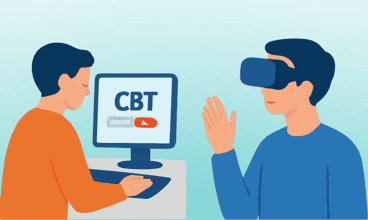
Bridging the Gap: From Knowledge to Field Practice
That operational gap is where Virtual Reality (VR) is gaining ground.
Rather than replacing traditional training, VR helps bridge the gap between understanding a task and performing it confidently in the field.
CBT is Good at Reaching The “What”
- Procedures
- Compliance requirements
- Background knowledge
- Safety concepts
VR is Good at Teaching The “How”
- Practical tasks
- Equipment operation
- Hazard awareness
- Emergency response
The key question is not whether CBT or VR is better, but what the training needs people to understand, practise or do. From there, organisations can choose the right mix of CBT, immersive practice and other learning methods to support that outcome.
What This Means for Mining, Defence and Energy
For organisations operating in high-risk environments, the strongest results are likely to come from combining the strengths of both approaches.
A mining company might use CBT to explain isolation procedures before allowing workers to practise those procedures in a virtual processing plant. A defence organisation could recreate operational scenarios that would be difficult, expensive or unsafe to run in real life. Energy operators can rehearse maintenance activities, emergency responses and equipment inspections before ever setting foot on site.
The research backs this up. A 2021 meta-analysis in the journal Human Factors found virtual, augmented and mixed reality training was as effective as conventional methods and most valuable where danger or cost make real-world practice impractical. A second 2021 meta-analysis, in Computers in Human Behaviour, found VR programs outperformed the alternatives tested, with one strong condition: the technology had to suit the task. In other words, the right tool for the right job.
Case study: Vehicle Priority Rules for a Mining Contractor
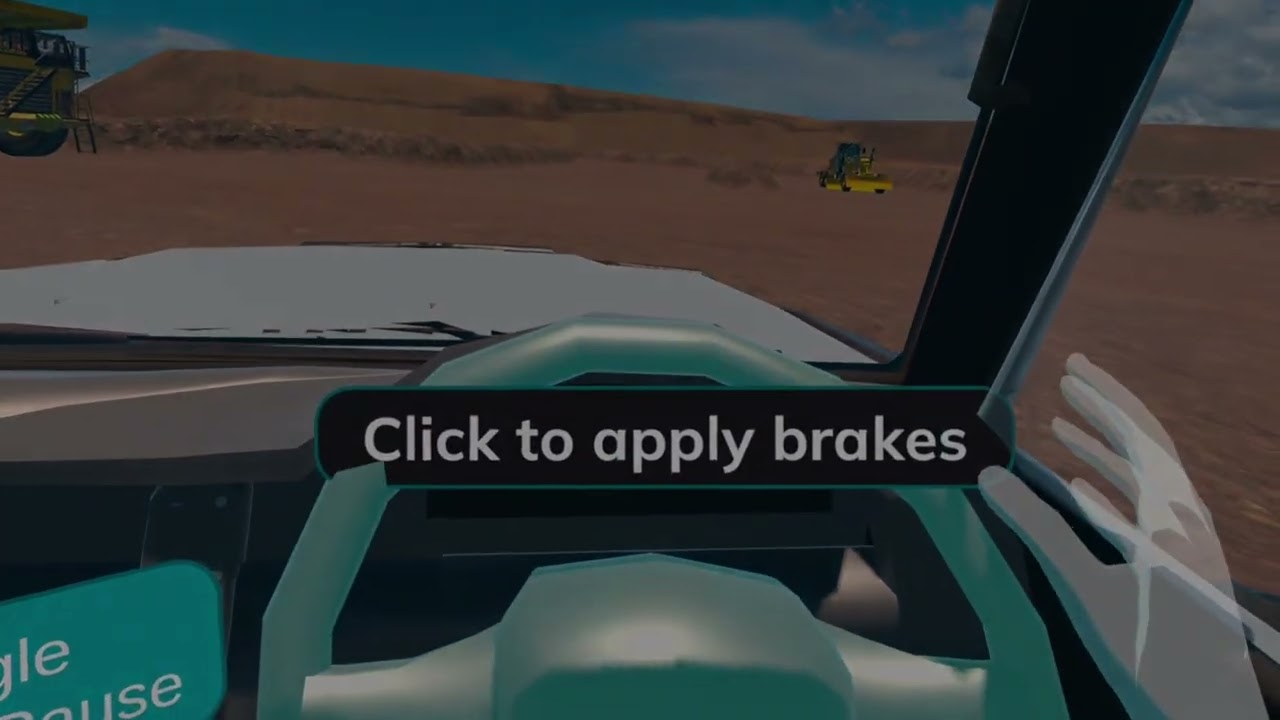
Sentient Computing partnered with a leading mining contractor to develop vehicle priority rules. The contractor’s workers needed to be able to apply vehicle priority rules confidently before entering operational environments. Knowing the rules on paper is one thing; applying them at a live intersection is another. Knowing this, we developed a VR training module that allows learners to practice in six realistic intersection scenarios, identifying the correct vehicle priority order and making safe decisions in a simulated environment. Trainers can monitor the experience in real time and pause scenarios to reinforce learning with additional questions.
The Outcome
The training has given trainers greater confidence that learners understand and can apply vehicle priority rules before going to site. It also creates an auditable competency record: a downloadable PDF report that can be added to each learner’s training record as evidence of completed training before driving independently on site.
Beyond the Technology
Getting results takes more than buying headsets or building online modules. Organisations need to consider content design, user experience, digital literacy and long-term support requirements. Issues such as cybersickness, hardware management and change adoption should form part of the implementation strategy from the beginning. Bruno’s reviews of Sentient’s own modules showed why design matters: where spoken narration and on-screen text competed for attention, learners risked cognitive overload. Small design decisions change what people actually learn.
The opportunity is not simply to digitalise existing training but to create learning experiences that are more practical, more scalable and more closely aligned with how work is actually performed.
Ready to Optimise Your Industrial Training Program
Download the full paper below or get in touch to discuss how CBT, VR and digital twin technologies can support training across mining, defence and energy operations.
About the Research Partnership
 Bruno Hernandez
Sentient partnered with Curtin University to host postgraduate researcher Bruno for an industry internship focused on immersive learning and workforce training.
During the internship, Bruno worked alongside Sentient’s instructional design and XR teams to investigate how VR, AR and CBT can be applied more effectively in industrial settings. He spent around nine hours analysing each of four Sentient VR experiences against multimedia and adult learning principles, and authored the white paper this article draws on.